
Stump Grinding vs. Stump Removal: Which Method is Right for Your Portland Property?
-
Posted on Sunday, December 28th, 2025 by writer
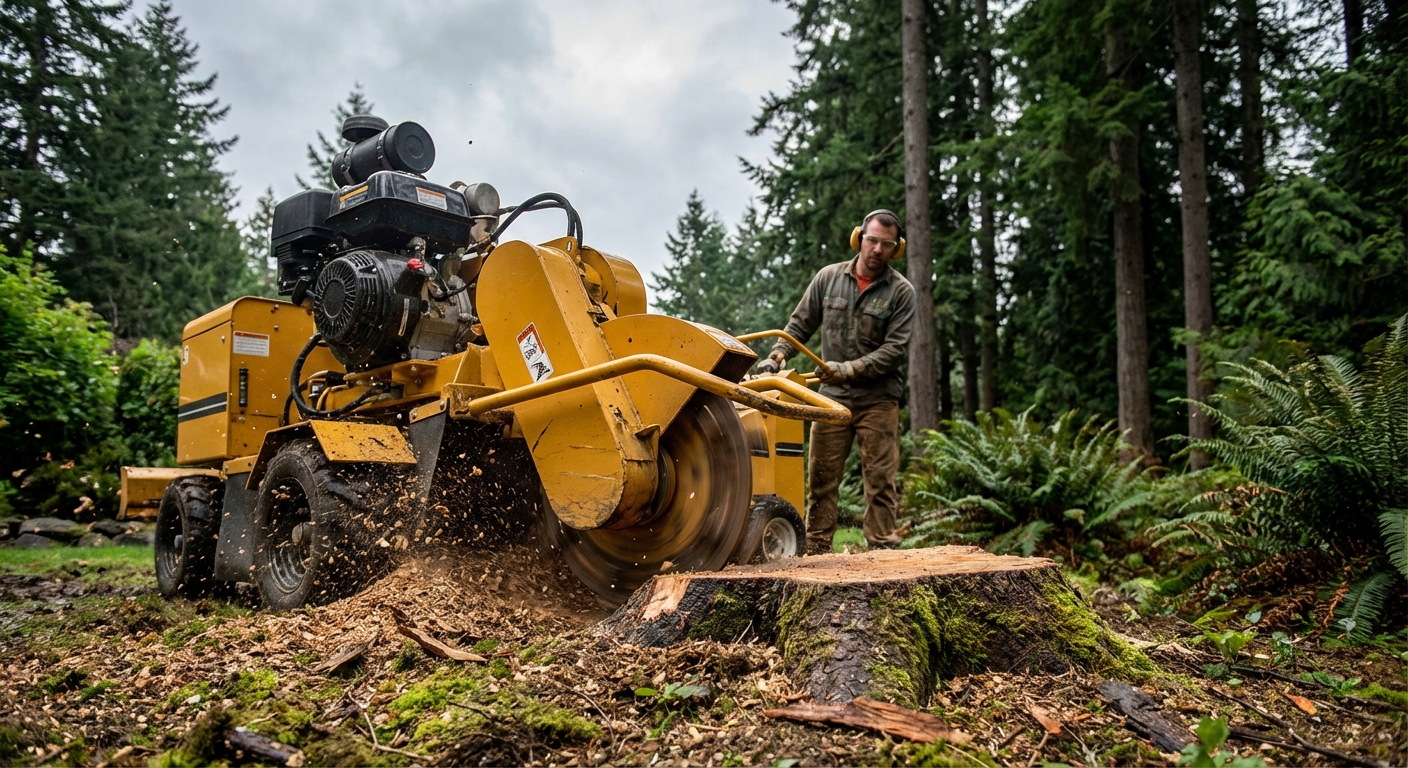
Table of Contents
In the lifecycle of urban landscape management, felling a tree is often perceived as the conclusion of a project. However, for property owners in Portland, the remaining stump presents a new, complex challenge. While many homeowners use the terms “stump removal” and “stump grinding” interchangeably, they are technically two divergent methodologies with vastly different implications for your soil, your wallet, and your landscape. At Smart Tree Service, we believe in empowering our clients with the technical knowledge to make the right choice. While we specialize in high-efficiency stump grinding services, this guide will objectively evaluate the mechanics, environmental impacts, and costs of both methods to help you decide which path is best for your property.
Grinding vs. Excavation: The Mechanics of Extraction
To understand why one method might be superior to the other, we must first look at the operational mechanics of how the wood is processed.
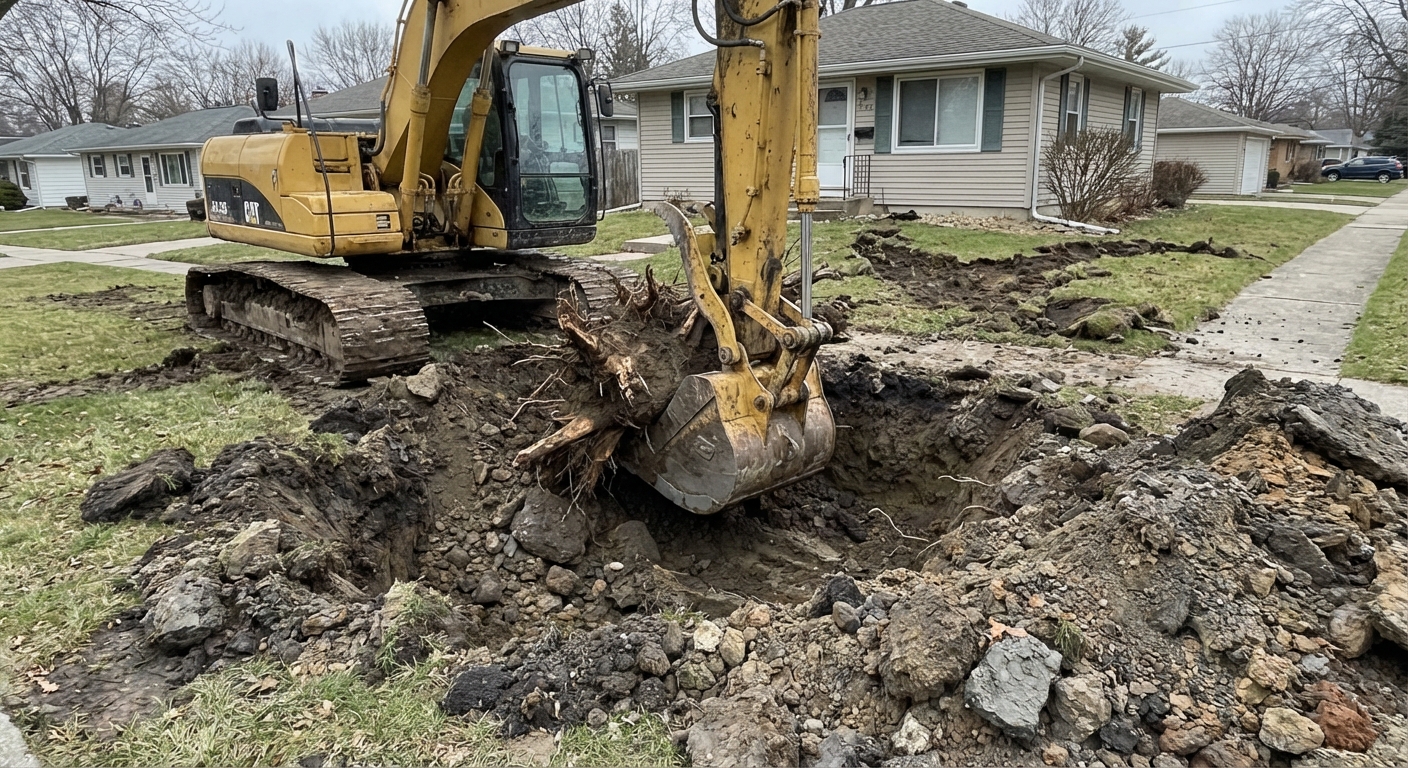
The mechanical difference between extraction and grinding affects landscape impact significantly. Stump Grinding: Precision and Preservation
Stump grinding is a subtractive process. It utilizes high-torque machinery equipped with a cutter wheel featuring carbide-tipped teeth. This wheel rotates at high speeds, shaving the wood in a sweeping motion.
- Depth: Standard industry practice involves grinding the stump to a depth of 6 to 12 inches below grade. This is sufficient to sever the cambium layer, preventing regrowth in most species, and allows for immediate turf restoration.
- Biomass: The stump is transformed into wood chips (mulch). This material is typically backfilled into the hole, where it decomposes over time, returning carbon and nitrogen to the soil.
- Impact: It is non-invasive and localized, meaning the surrounding landscape remains largely untouched.
Stump Removal (Excavation): Total Extraction
Stump removal is effectively a heavy civil engineering task. It involves the complete extraction of the root ball and major lateral roots.
- Scope: For mature Portland species like the Douglas Fir (Pseudotsuga menziesii), root balls can extend 4 to 8 feet in diameter.
- Mechanism: Heavy machinery, such as excavators or backhoes, must trench around the perimeter to sever anchor roots before hydraulically lifting the mass.
- Displacement: This process leaves a significant void in the earth that must be filled with imported soil to prevent sinkholes and restore grade.
The Financial Reality – Costs and Liability
For most homeowners, the decision often comes down to economics. The cost differential between grinding and full excavation is substantial, driven by labor, equipment, and disposal requirements.
Cost Breakdown
Based on regional averages for the Portland area, the price difference is stark.
Cost Variable Stump Grinding (Standard) Stump Removal (Excavation) Base Service Cost $150 – $450 $450 – $1,000+ Equipment Compact Grinder (Minimal access needed) Excavator (Requires wide access) Time on Site 1 – 3 Hours 4 – 8 Hours Disposal Fees $0 (Mulch stays on site) High (Trucking heavy root ball) Site Remediation Low (Rake mulch, add topsoil) High (Purchase fill dirt) The “Hidden Costs” of Excavation
Beyond the initial invoice, excavation carries hidden liabilities that are frequently overlooked:
- Utility Repair: Excavation significantly increases the risk of snagging underground water, gas, or irrigation lines that are often interlaced with tree roots.
- Hardscape Damage: The leverage required to pull a large stump can cause “ground swell,” which may crack nearby driveways, sidewalks, or foundations.
- Permitting: While grinding is considered maintenance, excavation involving significant soil displacement in certain Portland zones may trigger erosion control permits.
Environmental and Geotechnical Impact
Portland’s geography, particularly in the West Hills and near the Willamette River, relies on soil stability to manage our heavy seasonal rainfall.
Soil Structure and Drainage
Grinding leaves the distal (outer) root system intact. As these roots decompose, they create “macropores” in the soil. These channels improve water infiltration and aeration, mimicking natural forest decay processes and supporting the fungal-dominant soils preferred by Pacific Northwest native plants. Conversely, the heavy machinery required for full removal exerts high ground pressure, leading to soil compaction. Compacted soil has reduced pore space, which increases surface runoff and exacerbates erosion risks during Oregon’s wet winters.
The “Critical Root Zone”
Urban trees in Portland often grow in close proximity. Their root systems interlock in what is known as the “Critical Root Zone” (CRZ). Excavating a stump often requires ripping lateral roots that may be fused with the roots of neighboring healthy trees. This damage can destabilize adjacent trees or introduce entry points for pathogens. Grinding avoids this risk entirely by focusing only on the central biomass.
Biological Considerations & Replanting Strategy
A common hesitation homeowners have with grinding is the remaining underground roots. However, in Portland’s climate, nature handles the rest efficiently.
Decomposition Timelines
Underground roots decompose at predictable rates depending on the species. Here is what you can expect for common local trees:
- Red Alder: 3–5 years (Rapid decay)
- Bigleaf Maple: 5–8 years (Moderate decay)
- Douglas Fir: 10+ years (High resin content slows decay, providing soil stability)
- Western Red Cedar: 15+ years (Highly rot-resistant)
Decomposition, Nitrogen, and Future Planting
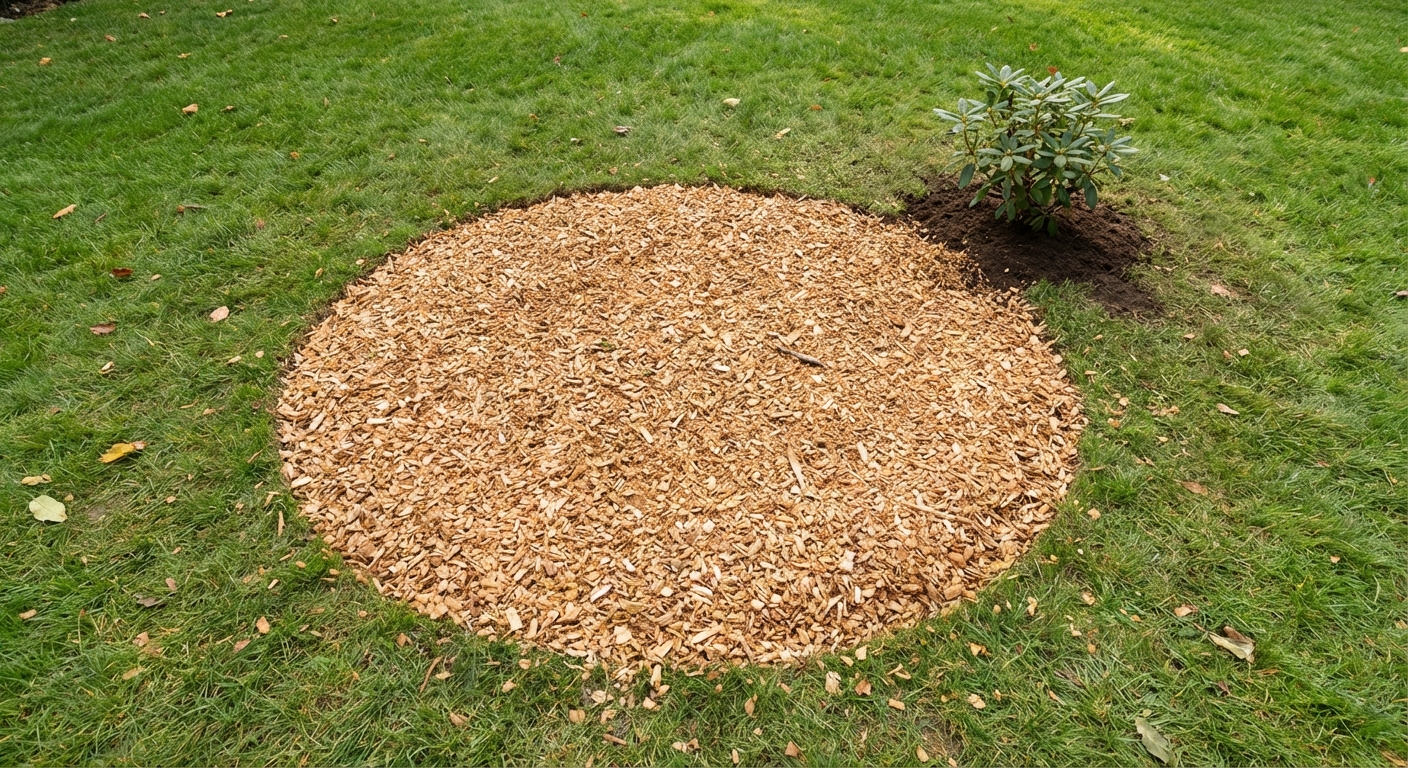
Mulch from grinding can be integrated into the landscape. There is a persistent myth that the wood chips left behind by grinding will “rob” the soil of nitrogen, killing new plants. Research shows this nitrogen drawdown is localized only to the interface between the wood and soil—less than a few millimeters deep. It does not affect established plant roots below the chips. While you cannot plant a new tree exactly in the center of a fresh grind immediately, you can plant grass, perennials, or small shrubs right away by mixing the grindings with nitrogen-rich topsoil.
Decision Matrix & Local Case Studies
How do you decide which method is right for you? Use this strategic recommendation guide to determine the best approach.
When to Choose Stump Grinding (Recommended)
Smart Tree Service recommends grinding for 90% of residential projects. It is the superior choice if:
- Landscape Preservation: The stump is near manicured lawns or flower beds.
- Infrastructure: The stump is within 5 feet of a driveway or foundation.
- Budget: You want the most cost-effective solution.
- Safety: You want to avoid leaving a large open crater in your yard.
When to Choose Excavation
Full removal is generally only necessary in two specific scenarios:
- Immediate Construction: You must pour a building foundation or wall footing directly over the stump location.
- Disease Control: The tree died of Armillaria (Honey Fungus) or Laminated Root Rot. Removing the infected wood is necessary to save other trees, as the fungus survives in dead roots.
Local Case Studies
Case Study A: The Historic Laurelhurst Elm (Grinding) A 60-year-old Elm was situated just 4 feet from a historic sidewalk and city water meter. Smart Tree Service utilized a compact grinder to shave the stump 10 inches below grade. The result? The sidewalk remained perfectly intact, and grass was established over the area within 4 weeks. The cost was 75% less than the excavation quote. Case Study B: The Beaverton Infill Project (Excavation) A developer needed to clear a lot for an Accessory Dwelling Unit (ADU) concrete slab. Full excavation was required. The process necessitated a 12-ton excavator, accidentally severed a gas line requiring emergency repair, and required importing 5 cubic yards of structural fill. While necessary for the foundation, the environmental disruption and cost were significantly higher.
Final Thoughts
For the vast majority of Portland homeowners, stump grinding is the logical choice. It preserves your soil structure, protects your hardscaping, and saves you money. Unless you are breaking ground on a new foundation or dealing with a severe fungal infection, the aggressive nature of full excavation is rarely warranted.
Need Expert Advice on Your Tree Stumps?
At Smart Tree Service, we are committed to preserving the beauty and integrity of your landscape. If you have a stump that needs to disappear or require full tree removal services, we are here to help.
References:
- Bob Vila. Stump Grinding vs. Removal: What’s the Difference? View Source
- Oregon State University Extension. Wood chips as mulch. View Source
- Penn State Extension. Avoiding Soil Compaction. View Source
- Angi. How Much Does Stump Removal Cost? View Source
- City of Portland. Tree Removal Permits and Title 11. View Source
- USDA Forest Service. Coarse Woody Debris: Decomposition Rates and Inputs. View Source
- Pacific Northwest Pest Management Handbooks. Armillaria Root Rot. View Source
Posted in Blog | No Comments »
503-897-1003
Quick Links
Services
Contact Us
- Location:
10275 SE 242nd Ave, Damascus, OR 97089 - Phone:
503-897-1003 - Email:
[email protected]
From permits to “Timber!” to removing stumps and debris, Smart Tree Service has got you covered anywhere in the Portland Metro Area
Read More